

How Hospitals Can Reduce Medical Necessity Denials
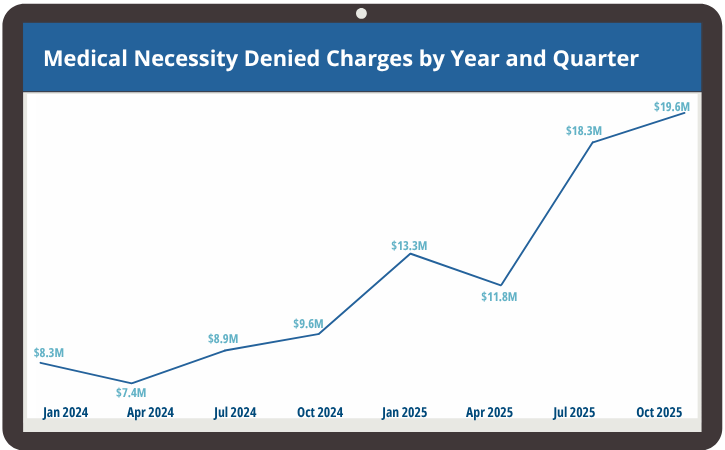
As the industry focuses on fixing prior authorization denials, a new hurdle is emerging for hospitals. We are beginning to see a distinct trend in the data: a sharp increase in medical necessity denials, in fact they have more than doubled, to over 130%, in the last 24 months. Payers are evolving their tactics, and hospitals must prepare now before this trend becomes an overwhelming operational problem. Leveraging modern healthcare analytics software and AI gives us a clear window into these shifts, allowing providers to act proactively.
The Economics of a Denial
To understand this shift, we must look at the underlying economics. Denying a claim for medical necessity can take a payer seconds. Their input costs are incredibly low. However, fighting that same denial places a massive burden of proof entirely on your hospital. It requires clinical experts, hours of thorough research, and significant financial resources just to prove the treatment was necessary.
Payers are effectively playing a numbers game. They deny the claim quickly and wait to see if your facility has the time and money to fight back. By utilizing strong business intelligence and proactive revenue cycle analytics, we can spot these specific payer behaviors early and prepare accordingly.
Hospitals can significantly reduce medical necessity denials by strengthening documentation, improving front-end workflows, and using healthcare analytics to:
1. Improve Clinical Documentation Accuracy
Clear physician documentation of the medical rationale, severity of illness, treatment decisions, and supporting clinical indicators for every encounter.
2. Use Predictive Healthcare Analytics
Leverage healthcare analytics software and AI-driven revenue cycle analytics to identify high-risk claims before submission and proactively correct missing documentation. Implement pre-submission claim reviews for documentation gaps, authorization issues, and payer-specific requirements before they enter the billing queue.
3. Standardize Medical Necessity Requirements by Payer
Different payers apply different criteria. Create standardized workflows that align authorization and billing processes with each payer’s specific medical necessity guidelines.
4. Strengthen Collaboration Between Clinical and Revenue Cycle Teams
Encourage ongoing communication between providers, case management, CDI teams, and billing staff to ensure documentation supports the billed level of care. The right analytics tools help teams understand and measure positive progress.
5. Track Denial Trends
Monitor denial patterns by payer, service line, physician, and facility to quickly identify emerging medical necessity denial trends and operational weaknesses.
6. Educate Staff on Evolving Payer Policies
Provide continuous education for clinical and billing teams as payer rules, authorization requirements, and medical necessity criteria continue to change.
Proactively, implementing denial prevention strategies helps hospitals reduce reimbursement delays, improve clean claim rates, and protect long-term revenue cycle performance. Retroactively, tracking trends and monitoring payer policies helps you stay prepared.
Protecting Your Bottom Line
Medical necessity denials are continuing to increase. Payers will only continue to ramp up these tactics over time. By building rigorous front-end processes and understanding the data, you protect your bottom line from unnecessary strain. Partnering with proven industry experts like PMMC ensures you have the right strategies in place for optimal healthcare revenue recovery. Stay proactive, prepare your clinical and billing teams, and keep your revenue cycle strong. By anticipating payer behavior, you can secure the revenue your hospital has rightfully earned.

Brian Kenyon oversees and manages the daily operations of PMMC’s Business Intelligence division as AVP of AI and Revenue Services. He has over eight years of experience in healthcare revenue cycle and business intelligence. Read Brian’s Bio.
