

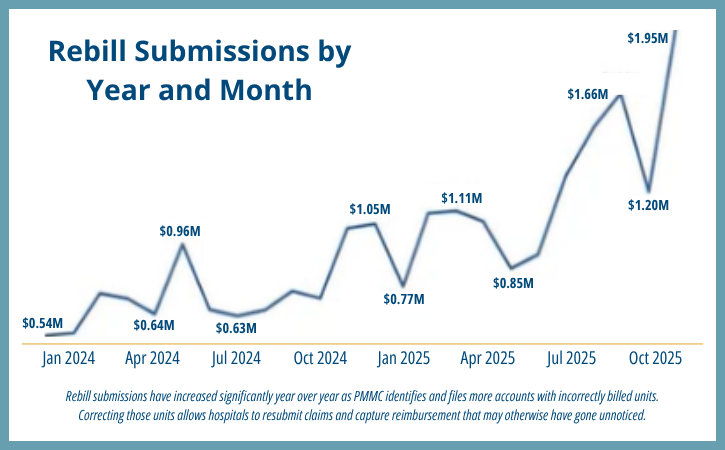
Healthcare revenue cycles are complex, and traditional claim tracking often isn’t enough to prevent revenue loss. While most teams focus on denials or underpayments, many hospitals overlook claims that appear “paid” but aren’t billed correctly. Bill audits address this gap, using advanced analytics and billing expertise to uncover hidden revenue opportunities. For years, this approach has consistently helped clients recover on average an additional 1% net patient revenue by identifying and correcting these missed opportunities—without appealing denials, but by simply billing smarter and billing completely.
The Difference Between “Paid” and “Paid Optimally”
A claim can be processed, paid, and closed—even if you’re losing money—simply because it was billed incorrectly. For example, many high-cost drugs ship in single-dose vials, but billable units are defined by volume — for some drugs, 1mg equals one unit. Some facilities bill the vial count instead. The math: a patient receives two 200mg vials. The claim should carry 400 units. It goes out with 2. The payer reimburses exactly what was billed, so the claim reconciles cleanly. Nothing flags in the calculation software or the facility’s HIS — by every internal measure, the account was paid correctly. PMMC catches these by flagging accounts where billed units aren’t appropriate, then reviewing medical records to confirm the actual administered amount. Where there’s a gap, we request a rebill with corrected units.
The corrected claim reprices at its true value, and the payer reimburses accordingly — often a substantial increase over the original payment.
Rebill optimization is about using billing expertise to find and correct these missed opportunities—not by appealing a denial, but by submitting an improved, accurate bill.
Why Most Recovery Teams Miss This Revenue
Most recovery and underpayment teams do strong work, but they focus on denials or clear underpayments. Without specific billing expertise or advanced tools that handle rebill opportunities, your team may be missing them. Specialized knowledge of codes, compliance requirements, and payer rules is essential to spot the rebill opportunities. By combining billing expertise with advanced analytics, organizations can uncover and capture revenue that would have otherwise gone unnoticed—setting a new benchmark for effective healthcare revenue recovery.
When these gaps are found, a rebill claim can be sent. You can capture more revenue by utilizing advanced software and experienced partners. This helps your organization achieve:
- Proactive Optimization: Go beyond fighting what was denied. Review and improve how claims are submitted to ensure you get paid what you deserve.
- Hidden Revenue Uncovered: Especially in larger and Medicare-heavy facilities, chart review can uncover upwards of $20 million in missed funds.
- Faster Payments: No denials to appeal or delays—just a properly coded claim that pays correctly the first time.
- Requires True Expertise: Knowing the correct code combinations requires deep billing experience and constant attention to industry changes, and a partner that is constantly up to date on current payer requirements.
As payer rules get tougher and basic underpayment recovery becomes common, complete billing is a key competitive advantage. Organizations acting on this trend and utilizing RCM analytics and healthcare revenue recovery are capturing millions in revenue their competitors leave behind. It’s time for a more strategic approach—don’t just measure if your claims are paid, measure if they’re paid correctly for the services you provide.

Brian Kenyon oversees and manages the daily operations of PMMC’s Business Intelligence division as AVP of AI and Revenue Services. He has over eight years of experience in healthcare revenue cycle and business intelligence. Read Brian’s Bio.
