


Lesser-of charge hits are increasingly eating into hospital’s revenue and have increased 30% year over year. Out of the health systems included in this survey, 43% saw an increase in lost revenue specifically due to lesser-of charges. These often-overlooked cost adjustments can greatly affect a hospital’s financial health. As hospitals strive to optimize performance, revenue cycle analytics, RCM analytics, and broader healthcare analytics software are becoming essential. Decoding these adjustments requires balancing market position, price transparency, patient affordability, and contractual charge limitations—all informed by modern business intelligence, analytics, and AI. A more sophisticated, data-driven approach empowers hospitals to protect reimbursement, strengthen competitiveness, and enhance healthcare revenue recovery while navigating a shifting financial landscape.
Understanding the Importance of Lesser-of Charges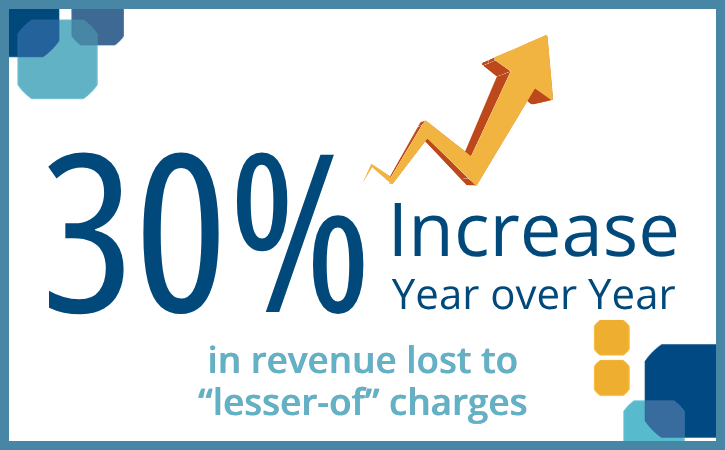
The term “lesser-of charges” might sound straightforward, but within healthcare reimbursement and contract language, it represents a pivotal opportunity for hospitals. It is a clause that requires hospitals to accept the lesser of the actual charge or the negotiated rate as reimbursement. This can result in considerable revenue adjustments if not managed effectively. Despite its significance, the prevalence of lesser-of charges issues is often underestimated. The ongoing challenge lies in balancing market position, patient affordability, and reduced charge reimbursements.
Hospitals that incorporate revenue cycle analytics into annual charge master updates and contract modeling can better optimize charge hits, improve alignment between pricing and reimbursement, and strengthen reimbursement consistency. The potential for optimization is immense. However, this requires a deep understanding of contract terms and their interplay with charge master pricing and management – and the ability to model them accurately using healthcare analytics software.
Impact on Reimbursement Rates
Balancing market position, price transparency, patient affordability, and lesser-of charges is a complex endeavor that requires careful consideration and strategic planning. These elements are crucial for healthcare providers as they navigate the intricate landscape of pricing and reimbursement.
While we can’t assign direct causality, it is noteworthy that the uptrend in lesser-of charge hits coincides with the CMS enforcing its price transparency mandate. This mandate aims to make healthcare pricing more accessible and understandable for patients. However, it also introduces new challenges for hospitals and healthcare systems as they attempt to adjust prices and be more competitive in the market.
Addressing the Challenge
Hospitals should consider strategic adjustments to their chargemaster to mitigate the impact of lesser charge hits. A carefully managed chargemaster not only ensures that billed charges accurately reflect the cost of services and align with negotiated rates but also balances market position with patient affordability. This strategic approach reduces charge hits, maintains favorable reimbursement rates, and enhances the hospital’s competitive edge. An experienced vendor, is well-positioned to seize these opportunities by providing expertise in aligning these critical factors.
Implementing expert solutions is another key strategy. Tools like PMMC’s healthcare analytics software and managed revenue cycle analytics help hospitals identify financial risks, model contract behavior, and pinpoint where charge adjustments will be most effective. These tools provide insights into billing practices, highlight areas for improvement, and facilitate strategic adjustments to billing processes. By leveraging these solutions, hospitals can better manage their financial performance and minimize the impact of charge hits.
A strong long-term plan should include:
- Regular audits
- Contract reviews
- Cross-department pricing and coding education
- Continuous monitoring with RCM analytics
This prevents a compounding effect of recurring charge hits and supports ongoing healthcare revenue recovery.
What’s Next?
Managing the lesser-of charge hits is an ongoing challenge for hospital financial teams. By understanding the dynamics of these adjustments, hospitals can optimize their financial performance and maintain stability in reimbursement rates. Financial executives are encouraged to explore professional solutions and tools that offer insights into billing practices and contract management. With expert guidance, hospitals can enhance their revenue streams, improve patient care, and ensure long-term financial health.

Brian Kenyon oversees and manages the daily operations of PMMC’s Business Intelligence division as AVP of AI and Revenue Services. He has over eight years of experience in healthcare revenue cycle and business intelligence. Read Brian’s Bio.
