


Strategic Pricing Drove Up To a 15 Percent Increase in Net Revenue
Effective pricing strategies are critical for driving profitability in healthcare organizations. Organizations that take a strategic approach to chargemaster adjustments often see significantly better results—reporting between a 2 to 15 percent increase in average net revenue year-over-year (YoY), compared to just 3 percent for those without such strategies. Here’s how these targeted adjustments lead to substantial growth and why they matter.
Informed decisions help you take strategic action
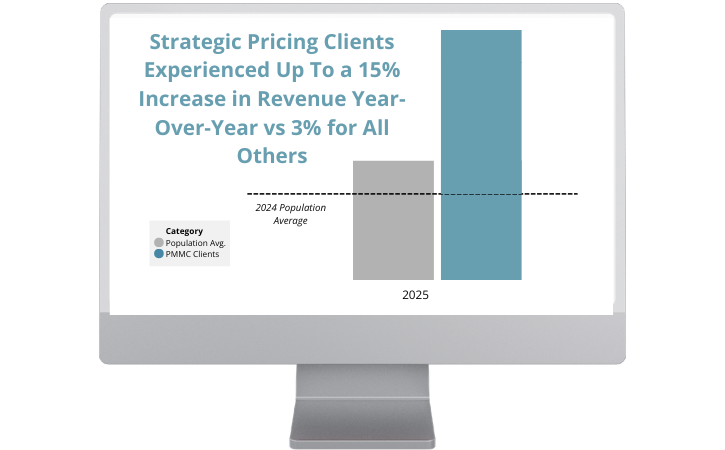 A tactical approach to shoppable codes using market insights, competitor insights and revenue data allowed for targeted increases in key service areas like Pathology and Lab, resulting in an 11 percent rise in revenue from these services. Organizations that avoided changes to shoppable services altogether left opportunity on the table and experienced larger, more concentrated increases in areas such as ER.
You risk negative outcomes with broad pricing increases
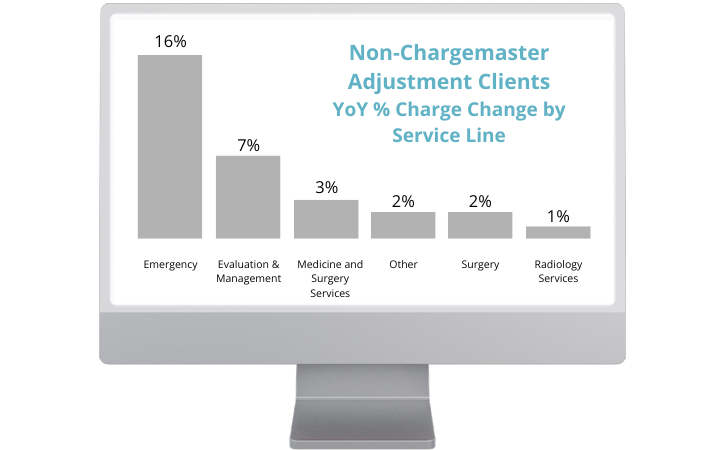 Without access to robust revenue cycle analytics, you may be implementing untargeted and generalized increases in Emergency Room (ER) charges, reporting hikes as high as 16 percent. These broad adjustments exposed hospitals to unfavorable public pricing comparisons, negatively impacting their reputation and potentially reducing patient satisfaction. By comparison, we saw that clients who avoided unnecessary pressure on sensitive service areas achieved better results without compromising public perception.
Decrease charges in non-revenue sensitive areas
Decreasing charges in non-revenue sensitive areas, such as anesthesia, allows for strategic adjustments in other areas. Since anesthesia is less revenue-sensitive, reducing charges here creates room to increase charges in higher-impact areas like surgery.
The right healthcare analytics tools identify where changes yield the greatest return—balancing financial performance with compliance and transparency.

Brian Kenyon oversees and manages the daily operations of PMMC’s Business Intelligence division as AVP of AI and Revenue Services. He has over eight years of experience in healthcare revenue cycle and business intelligence. Read Brian’s Bio.
